
The peak dates for the Perseids are always around August 11–13, 2025. However, this year, the light from the Full Moon on August 9 will interfere with the number of shooting stars visible to the naked eye around the peak.
Luckily, the Perseid Meteor Shower is active from around July 17 to August 24, 2025, giving skywatchers a broader …
Read the full story at timeanddate.com.
Banner image ©2015 Philip James Dolman

A Supermoon is a full Moon or a new Moon at its closest point to Earth; also called perigee. A Super Full Moon looks around 12 to 14% bigger than its counterpart, the Micromoon.
Super Worm Moon in the March Sky
At 17:47 UTC/2:47pm on March 9, 2020, the Moon turns full just as it reaches the point on its orbit closest to the Earth. This will make the March Full Moon, traditionally known as Worm Moon, look bigger and brighter, especially during moonrise and moonset. The Moon will look full for a while, so if the clouds clutter your view, just try a few nights before or after.
See more here …

There are two definitions of a Blue Moon; both are a type of Full Moon and have nothing to do with color. If the Moon looks blue, it’s because of dust in the atmosphere.
On 18-May-2019 there will be a Seasonal Blue Moon.
A Seasonal Full Moon is the third Full Moon in an astronomical season with four Full Moons (versus the usual three).
Read more here …
One of the brightest meteor showers of the year, the Perseids, is active now. It peaks around August 11–13, 2018, with up to 100 meteors per hour. If the skies are clear, the Perseids can be seen from …
Read the full story at timeanddate.com.
Banner image ©2015 Philip James Dolman

A Supermoon happens when a Full Moon or New Moon coincides with the Moon’s closest approach to Earth; also called perigee. A Super Full Moon looks around 12% to 14% bigger.
This Supermoon is happening on 14-Nov-2016 and will be the closest a Full Moon has been to Earth since 25-Jan-1948.
The next time a Full Moon is even closer to Earth will be on 25-Nov-2035 (times in UTC).
Read the full stories at Popular Mechanics, Space.com, ScienceAlert, timeanddate.com or google yourself for more info.
Feature image ©2016 bigstockphoto.com/duallogic
It’s time for the annual Perseids! The 2016 meteor shower will peak on August 11 and 12. A waxing gibbous Moon will make it harder for observers to watch the meteor shower.
Read the full story at timeanddate.com or CTV News Atlantic.
Banner image ©2015 Philip James Dolman

Rumor has it that there will be a Total Solar Eclipse coming up next week. And, yes, it’s true. On 8/9-Mar-2016 the moon swings right in front of the sun and will cover it totally for 4 minutes and 9 seconds … But it is all about location, location location!
 So before you get too excited – no, the eclipse cannot be seen at all from Nova Scotia – or the North American continent. It will mainly play out over the North Pacific ocean/Indonesia.
Still interested? Read the articles in Earth Sky or timeanddate.com for more details.
Btw, the next Total Solar Eclipse (at least) partially visible from Nova Scotia will happen next year on 21-Aug-2017. Stay tuned!
Just a day after the full moon, Jupiter will rise alongside the moon Tuesday evening – 23-Feb-2016 – around 7pm your time. Also, a new round of high latitude auroras could be in the offing Tuesday night as well.
A day after the full moon, Jupiter will rise alongside the moon Tuesday night. Jupiter is brighter than any star in the sky and will shine brilliantly alongside the moon. Continue reading …
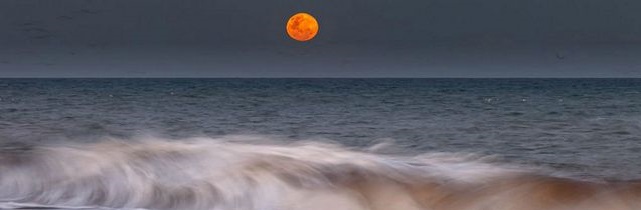
We know that the Moon plays a significant role in our lives on Earth, from lighting up the night sky to setting the times of the ocean’s tides. But a new study suggests that our favorite cratered satellite also influences something else on our planet: the chances of rainfall.
Read the full story at ©2016 ScienceAlert.
Feature photo ©2011 Luis Argerich/Flickr
