All posts by Markus J. Heinis

Daylight Savings Time or Daylight Saving Time

Daylight Saving Time (DST) is often misspelled “Daylight Savings”, with an “s” at the end. Other common variations are “Summer Time”and “Daylight-Saving Time”.
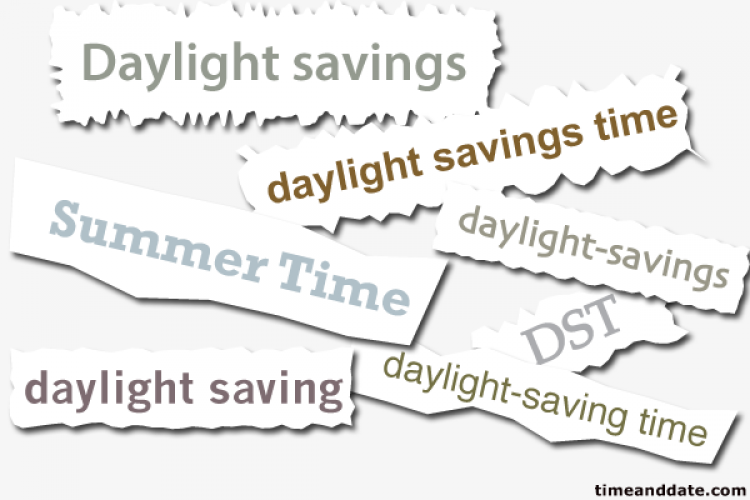
Setting our clocks one hour forward in the spring is often referred to as “Daylight Savings Time” even though “Daylight Saving Time” is the correct spelling. Continue reading Daylight Savings Time or Daylight Saving Time

Did you know: Which Planet’s Days Are Longer Than Its Years?

In the family of planets that make up our solar system, Venus is a peculiarity among peculiarities. The roughly Earth-sized but scorching planet has an average surface temperature of 462C (864F) and an atmosphere composed almost entirely (96.5%) of carbon dioxide.

Venus

As far as planetary extremes go, Continue reading Did you know: Which Planet’s Days Are Longer Than Its Years?

Why is the Year’s Latest Sunrise NOT on the Winter Solstice?

Winter Solstice usually occurs around December 21 in the Northern Hemisphere and June 21 in the Southern Hemisphere. Many believe that the year’s latest sunrise and earliest sunset also happen on this day. This is not the case.

If you look at the sunrise and sunset timings for any city in the Northern Hemisphere around the December Solstice, you will notice that the earliest sunset occurs a few days before the Solstice. Similarly, the latest sunrise happens a few days after the solstice.

Continue reading Why is the Year’s Latest Sunrise NOT on the Winter Solstice?

Winter Solstice, 21-Dec-2014 @ 07:03pm AST

The December solstice is on either December 20, 21, 22 or 23. It is called Winter Solstice in the Northern Hemisphere, where it is the shortest day of the year.

December Solstice 2014 in Nova Scotia, Canada is on Sunday, December 21 at 7:03pm AST.

The Sun’s position

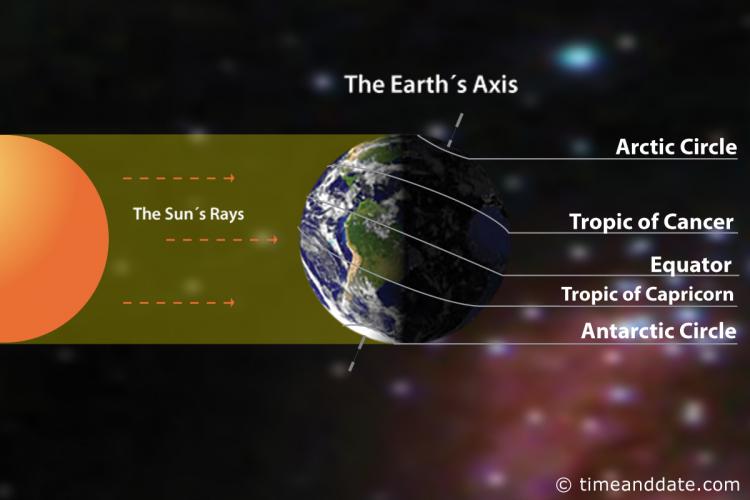
The Sun is directly overhead of the Tropic of Capricorn in the Southern Hemisphere during the December Solstice.

The December Solstice occurs when the Sun reaches its most southerly declination of -23.5 degrees. In other words, when the North Pole is tilted furthest – 23.5 degrees – away from the Sun.
Continue reading Winter Solstice, 21-Dec-2014 @ 07:03pm AST